Ecommerce SEO Services: The Complete Guide
If your online store is not showing up on Google, you are losing sales every single day. Ecommerce SEO services help fix that. This guide explains what these services include, how they work, what they cost, and how to pick the right agency or consultant for your store.
This guide is written for store owners and marketers who want clear, honest answers. No jargon. No hype.
Quick Answer
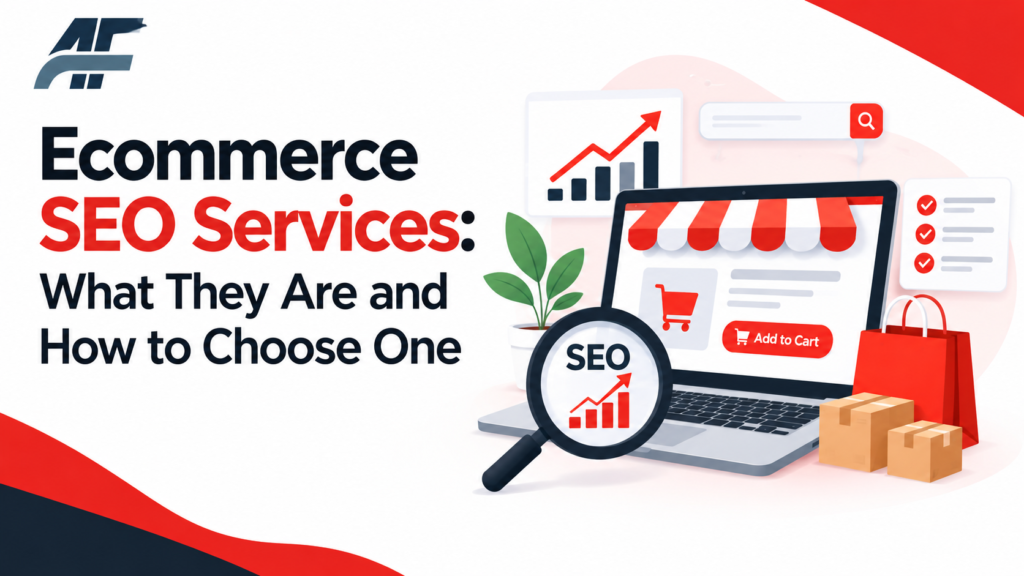
Ecommerce SEO services are professional services that help online stores rank higher on Google and other search engines. They include keyword research, product page optimization, technical fixes, content creation, and link building. The goal is to bring in free, ongoing traffic that turns into sales, without paying for every click through ads.
What Are Ecommerce SEO Services?
Ecommerce SEO services are a set of tasks done to help an online store rank higher in search results. These tasks are usually handled by an SEO agency or an individual ecommerce SEO consultant.
Unlike regular SEO, ecommerce SEO focuses on product and category pages, not just blog posts. A store may have hundreds or thousands of pages. Each one needs to be found, understood, and trusted by Google.
Common tasks inside ecommerce SEO service packages include:
- Keyword research for products and categories
- On-page SEO for product pages, category pages, and the homepage
- Technical SEO (site speed, mobile usability, indexing issues)
- Content creation (buying guides, blog posts, FAQ pages)
- Link building (getting other trusted sites to link back to the store)
- Conversion-focused improvements (better titles, descriptions, and internal links)
[RELATED POST: https://ahmadflow.com/category/e-commerce-online-store/]
Why Ecommerce SEO Matters for Online Stores
Search engines send free traffic every day, without an ongoing ad cost. Once a page ranks well, it can keep bringing in visitors for months or years.
Here is why this matters more for ecommerce than most other websites:
- Buyers use search engines to compare products. Many shoppers search for a product before they know which brand to buy from.
- Paid ads stop the moment you stop paying. SEO traffic keeps coming even on days you spend nothing on ads.
- Product pages need to answer buyer questions. Good SEO also improves the page itself, which can lead to more sales, not just more visitors.
- Competitors are already doing it. If a competitor’s product page ranks above yours, they get the click, even if your product is better.
How SEO in Ecommerce Works
SEO in ecommerce is not one task. It is a group of connected activities. Here is how they fit together.
1. Keyword Research
This step finds the exact words shoppers type into Google when looking for products like yours. For example, someone may search “waterproof hiking boots for women” instead of just “boots.” Good keyword research finds these specific, high-intent phrases.
2. On-Page SEO
This means improving each page so both Google and shoppers understand it clearly. This includes:
- Clear, keyword-rich product titles
- Unique product descriptions (not copied from the manufacturer)
- Descriptive image file names and alt text
- Clean URL structures
- Internal links between related products and categories
3. Technical SEO
Technical SEO fixes the parts of a website that affect how well Google can crawl and index it. Common issues on ecommerce sites include:
- Slow page loading speed
- Duplicate product pages (often caused by size or color filters)
- Broken links from discontinued products
- Poor mobile usability
4. Content Marketing
Blog posts, buying guides, and comparison articles help attract shoppers who are still researching. This content also builds trust and can earn links from other websites.
5. Link Building
Links from other trusted websites act like votes of confidence for Google. For ecommerce stores, this can include product reviews from bloggers, mentions in gift guides, or partnerships with relevant publications.
[RELATED POST: https://websoftocean.com/category/e-commerce-online-store/]
Ecommerce SEO Consultant vs Agency vs In-House Team
Store owners usually choose between three options. Each one fits a different budget and business size.
| Option | Best For | Pros | Cons |
|---|---|---|---|
| Ecommerce SEO Consultant | Small stores, single-person decision making | Personal attention, often lower cost | Limited hours, may lack a full team for large projects |
| Ecommerce SEO Agency | Growing or established stores | Full team (content, technical, link building), proven processes | Higher cost, less individual attention |
| In-House SEO Team | Large stores with steady revenue | Full control, deep product knowledge | Expensive to hire and train, slower to start |
If you run a small store with a limited budget, an ecommerce SEO consultant can be a good starting point. If you need a full strategy across many product categories, a best ecommerce seo agency with a full team is usually a better fit.
How to Choose the Best Ecommerce SEO Agency
Not every agency that offers “SEO for ecommerce” understands how online stores actually work. Use this checklist before hiring anyone.
- Ask for ecommerce-specific case studies. General SEO experience is not the same as experience with product and category pages.
- Check how they handle technical SEO. Ecommerce sites often have thousands of pages, so technical skill matters a lot.
- Ask how they measure success. Traffic alone is not enough. Ask how they track sales and revenue from organic search.
- Avoid guaranteed rankings. No honest agency can guarantee a #1 ranking, since Google’s algorithm is not controlled by any agency.
- Ask about reporting. You should get regular, clear updates on what was done and what results followed.
- Understand the contract length. SEO takes time. Be cautious of agencies that only offer month-to-month with no clear plan.
What to Look for in an Ecommerce SEO Consultant
If you are hiring an individual ecommerce SEO consultant instead of an agency, look for these signs of real expertise:
- They ask detailed questions about your products, margins, and best sellers before making suggestions.
- They can explain technical issues in plain language.
- They have worked with ecommerce platforms like Shopify, WooCommerce, or Magento before.
- They set realistic timelines instead of promising fast results.
How Much Do Ecommerce SEO Services Cost?
Pricing varies widely based on store size, competition, and the scope of work. Common pricing models include:
- Monthly retainer: Ongoing work billed every month, common for agencies.
- Project-based pricing: A fixed price for a specific task, such as a technical SEO audit.
- Hourly consulting: Common with independent ecommerce SEO consultants for smaller, defined tasks.
Costs depend on how many products you sell, how competitive your industry is, and how much content or technical work is needed. A small store with a few hundred products will usually need less work than a store with tens of thousands of SKUs.
Common Mistakes in Ecommerce SEO
Many stores make the same mistakes, which slows down results or wastes budget.
- Using manufacturer product descriptions. Copied descriptions can hurt rankings because Google prefers original content.
- Ignoring site speed. Slow product pages lose both rankings and sales, since shoppers leave quickly.
- Leaving out-of-stock pages broken. Deleting these pages without a plan can waste past SEO value. Redirecting them properly usually works better.
- Focusing only on the homepage. Most ecommerce traffic comes from product and category pages, not the homepage.
- Skipping mobile optimization. Most online shopping happens on phones, so a slow or hard-to-use mobile site directly hurts sales.
Best Practices for Ecommerce SEO
- Write unique, detailed product descriptions that answer common buyer questions.
- Use clear category structures so both shoppers and Google can navigate the site easily.
- Add customer reviews to product pages, since fresh content and honest feedback build trust.
- Keep URLs short and readable, such as
/womens-hiking-bootsinstead of long strings of numbers. - Regularly check for broken links and fix them quickly.
- Use structured data (schema markup) so product prices, availability, and ratings can appear directly in search results.
Expert Tips
- Prioritize your best-selling categories first. Focus SEO effort where the return on investment is highest, rather than trying to fix every page at once.
- Combine SEO with a strong site search. Even after a shopper lands on your site from Google, a poor on-site search experience can lose the sale.
- Track rankings and revenue together. A page can rank well but still convert poorly. Watching both numbers gives a fuller picture of success.
Frequently Asked Questions
What is the difference between ecommerce SEO and regular SEO?
Ecommerce SEO focuses on optimizing product and category pages at scale, along with technical issues unique to online stores, such as duplicate pages from filters and variants. Regular SEO often focuses more on blog content and single-page websites.
How long does ecommerce SEO take to show results?
Most stores start seeing early improvements within three to six months, with stronger results building over six to twelve months. Timelines depend on competition, site history, and how much work is needed.
Do I need an ecommerce SEO agency if I already run paid ads?
Paid ads and SEO work well together, but they solve different problems. Ads stop bringing traffic once you stop paying. SEO builds long-term, ongoing traffic that continues even when your ad budget changes.
Can I do ecommerce SEO myself without hiring anyone?
Small stores with time and technical skill can handle basic ecommerce SEO themselves, such as writing better product descriptions and fixing simple technical issues. Larger stores or highly competitive industries usually benefit from an experienced consultant or agency.
What platforms do ecommerce SEO services typically support?
Most ecommerce SEO agencies and consultants work with major platforms such as Shopify, WooCommerce, BigCommerce, and Magento. It is worth confirming platform experience before hiring.
Key Takeaways
- Ecommerce SEO services help online stores rank higher on Google through keyword research, on-page optimization, technical fixes, content, and link building.
- An ecommerce SEO consultant fits smaller stores and budgets, while a full agency suits larger stores needing a complete strategy.
- Choosing the best ecommerce SEO agency means checking real case studies, technical skill, and honest reporting, not guaranteed rankings.
- Common mistakes include copied product descriptions, slow site speed, and ignoring mobile shoppers.
- Results take time, usually three to twelve months, but they build long-term traffic that does not disappear when ad spending stops.